Dialogue Between History, Modernity, and the Future: Temporal-Spatial Memory Narration from the Perspective of Leisure Philosophy
——Minutes of the 2025 Academic Annual Conference on Leisure and Social Progress
Compiled by Ma Huidi / Geng Jiangyan
November 27, 2025
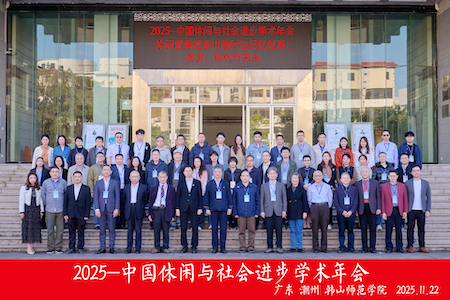
Hosted jointly by the Specialized Committee of Leisure Philosophy, Chinese Society for Dialectics of Nature, and Hanshan Normal University, the 2025 Academic Annual Conference on Leisure and Social Progress in China was held at Hanshan Normal University in Chaozhou, Guangdong from November 21 to 23. With the theme "Temporal-Spatial Memory Narration from the Perspective of Leisure Philosophy: History, Present, and Future", the conference set up two major sections—"Theoretical Exploration" and "Practical Cases"—covering 20 discussion topics involving multiple disciplines such as Marxism, philosophy, sociology, economics, history, and cultural heritage. Nearly 60 representatives from universities and research institutions across the country, including Hong Kong, Macao, and Taiwan, attended the conference, and 50 complete papers and multiple abstracts were received.
This year marks the 30th anniversary of leisure research in China. At the opening ceremony, a ceremony to pay tribute to academic predecessors was held first—to express respect to founders such as Yu Guangyuan, Cheng Siwei, Gong Yuzhi, and Zhu Houze. The concept they left behind, "pay attention to leisure in national economy and people's livelihood, and focus on humanistic care in leisure", as well as the ideological wealth of "explore the path for academics, pray for people's well-being, uphold morality for society, and enlighten the public's wisdom", remain the guiding beacons for scholars of later generations. This commemorative session endows the conference with academic heritage and a sense of mission.
In his speech at the opening ceremony, Chen Haizhong, Vice President of Hanshan Normal University, expressed the expectation that through in-depth discussions at this conference, the theoretical innovation and practical transformation of leisure philosophy will be promoted, providing theoretical support and practical paths for the application of Chaozhou Ancient City for World Heritage status and the establishment of a National Demonstration Area for the Protection and Utilization of Cultural Relics.
Wang Wenzhang, Academic Advisor to China's leisure research and President of the Chinese National Academy of Arts, sent a congratulatory message in writing, hoping that participating scholars will base themselves on the experience of Chaozhou's cultural development, focus on the "living inheritance" of culture, and actively offer suggestions for the development of China's leisure cause. He wished the conference a blooming of ideas and fruitful results; and hoped that in academic exploration, scholars will make the temporal-spatial memories of different forms of cultural heritage more three-dimensional, rich, and vivid!
Feng Changgen, Chairman of the Specialized Committee of Leisure Philosophy, Chinese Society for Dialectics of Nature, reviewed that since predecessors such as Mr. Yu Guangyuan pioneered the field of leisure research in 1995, the discipline has entered its "thirtieth year". The academic expectations left by the predecessors have guided contemporary scholars to base themselves on the changes of the times, continuously expand the social functions of leisure research, and highlight its academic value.
Dong Chunyu, Vice Chairman of the Chinese Society for Dialectics of Nature, started with "Leisure: Retrieving the Meaning and Creativity of Life" and deeply explained the inherent connection between life and leisure. He called on participating scholars to take academics as the path, morality as their responsibility, and innovation as the core, so that the academic torch of leisure research can be passed down from generation to generation.
Plenary Keynote Speeches
Shen Aimin, former Member of the Secretariat of the China Association for Science and Technology, put forward "Several Issues in Leisure Research". He reviewed his connection with domestic leisure research, affirmed from the perspective of discipline construction that leisure research has developed into a well-progressed and mature discipline; starting from the small stories of scientists such as Qian Xuesen, Yang Zhenning, and Li Zhengdao who valued art and science, he extended that leisure should have natural history thinking, strengthen holistic thinking, and give play to its advantages of interdisciplinary and cross-disciplinary research. He emphasized that leisure research is inseparable from art and science, and it is necessary to find an accurate disciplinary positioning, construct a core theoretical system, clarify research objects and boundaries, and get out of the bottleneck period of disciplinary development.
Ren Dayuan, Professor of the International Institute of Chinese Culture at Beijing Foreign Studies University, made a tentative reflection on leisure philosophy. He used ChatGPT-5.1 Thinking and DeepSeek-R1 to retrieve the international and domestic research backgrounds of leisure research respectively, and summarized the disciplinary characteristics of leisure research. He believed that the application of AI technology, on the one hand, can provide new space for leisure research, and on the other hand, we must pay attention to the constraints of mobile phones (or AI) on human beings and restore autonomous leisure.
Zhou Daxing, Chairman of the Organizing Committee of the Guangdong-Hong Kong-Macao Greater Bay Area International Cultural and Art Festival, took the development of the Macau Youth Sports Dance Association as a specific case, analyzed that artistic and sports quality can be used as core cultural capital to promote different mechanisms of "theme shaping", "atmosphere creation", and "format innovation" of the leisure cultural environment, and fundamentally improve the quality and connotation of leisure culture. Systematic and high-quality art education for young people is the cornerstone of building strong vitality, creativity, and perception.
Feng Changgen, Chairman of the Specialized Committee of Leisure Philosophy, Chinese Society for Dialectics of Nature, demonstrated Shaoxing's literary status with detailed data and materials, and explained the road to literary peaks in Shaoxing from "Ballad of Shooting" to Lu Xun with a "pyramid chart" of Shaoxing's literary masters in successive dynasties. The "pyramid chart" shows the profound origin of Shaoxing's numerous literary masters—in the pre-Qin period, there were 8 ancient poems in Shaoxing; in nearly 2,000 years since the Han Dynasty, Shaoxing has produced 501 literary masters, an average of one every 4 years, including 268 famous literary masters, 92 important and famous literary masters; 20 literary masters who opened a new "section" in the history of Chinese literature; 3 literary masters who opened a new "chapter"; and 1 literary master who opened a "new era" (Lu Xun). From Shaoxing's literary history, he drew an admirable conclusion—Shaoxing is "the World's No.1 City of Literature". In addition, he introduced the research method of "The World's No.1 City of Literature: Shaoxing", hoping to stand on the shoulders of giants, make high-quality literature reviews with first-class documents, first-class comprehensive ability and judgment, which is the foundation and premise of innovation.
Hu Zhijian, former President of the Chinese Academy of Science and Technology for Development, Ministry of Science and Technology, pointed out that AI4S has become a new paradigm for scientific discovery. The paradigm of scientific discovery has evolved through stages such as empirical observation and theoretical calculation, and now enters the data-intensive AI4S era—after data is obtained through instruments and processed and stored by software, AI analysis realizes the unification of theory, experiment, and simulation. This paradigm will promote breakthroughs in multiple fields such as foundation models. Relevant scientific research institutions need to build national-level platforms, develop open-source communities, and cultivate interdisciplinary talents to adapt to the changes. This transformation will also directly affect leisure narration and bring tests and challenges to future leisure life.
Li Mingzong, Supervisor of the Taiwan Outdoor Recreation Society, based on the travel records of some writers, painters, friends, and himself, discussed memories and nostalgia, as well as insights into life. In his view, life is a journey from birth to death, and travel is an indispensable experience in life. The unique experiences of life and travel will become memories, which are gradually accumulated, blurred, forgotten, reorganized, and reinterpreted in the river of memory, and then become nostalgia, as well as longing and imagination for the future. Travel, precisely in the flowing time and changing space, endows life with profound significance.
Gao Shunli, former Deputy Director of the Policy, Law, and Regulation Department of the National Tourism Administration, combined with local government decisions, demonstrations in the cultural and tourism industry, and social public opinion in Chaozhou, put forward some targeted suggestions for the protection, inheritance, and utilization of Chaozhou Ancient City's culture: properly adjust the host-guest sharing relationship, scientifically layout cultural and tourism formats, vigorously develop leisure and vacation, strive to deepen the integration of culture and tourism, and advocate concept innovation and emancipation. He hoped that Chaozhou Ancient City can take the opportunity of applying for World Cultural Heritage to upgrade the integration of culture and tourism, and promote the upgrading of the cultural and tourism market and industry in the city and even the region.
Group Speeches and Discussions
All participants expressed their academic views with full academic enthusiasm.
Group 1: Temporal-Spatial Memory and Historical Traces of "Man and Nature"
Sun Hongwu, Vice President of Jiangsu Academy of Agricultural Sciences, focused on "Historical Traces and Modern Reflection of 'Family, Courtyard, and Farming & Breeding'", pointing out that family, courtyard, and farming & breeding are the cultural core of China's agricultural civilization. The three are interdependent and symbiotic, not only a field for spiritual habitat and life interaction, but also an important carrier for understanding human nature and socialization. Taking historical traces as the thread, this paper explores its in-depth value from an interdisciplinary perspective, provides enlightenment for coping with modern dilemmas and reconstructing the connection between humans and nature, and also expands a new research perspective of "family philosophy".
Yi Neng, Li Fanfan, Gu Xuanzhu, Chen Guangyu, Luo Hairong, Mu Bing, Yang Yiyang from Jiangsu Academy of Agricultural Sciences, and Du Zhenning from Jiangsu Zhongjian New Agricultural Technology Co., Ltd. introduced the multiple values of courtyard planting, the historical origin of Chinese tea culture, and the innovation of family intelligent vegetable planting cabins from multiple perspectives of theory and practice. They explained the interrelationship between traditional agricultural civilization and ecological philosophy, pointing out that in reconstructing the relationship between humans and the world in the order of life, technology should not dissolve nature, but should become a continuation of cultural life, so that reason and vitality, algorithms and virtue can re-converge in a new form of civilization.
Zhang Shuai, a joint doctoral student from Nanjing Agricultural University and Chengdu Institute of Mountain Hazards and Environment, Chinese Academy of Sciences, introduced "Livelihood Strategies of Resettled Herdsmen in Extremely High-Altitude Areas Based on the COM-B Model—A Case Study of the Senburi Resettlement Site in Tibet", analyzed the situation of high-intensity illegal occupation of agricultural land in China, and pointed out the path of "converting blockage into dredging". Wan Fangliang, a master student from Chengdu Institute of Mountain Hazards and Environment, Chinese Academy of Sciences & Ministry of Water Resources, and University of Chinese Academy of Sciences, with the theme "How the Red Line is Challenged: Data-Intensive Science Reveals the Real Driving Forces of Agricultural Land Loss in China—An Empirical Analysis Based on 'General Intelligent Ultra-Large-Scale Qualitative Research Coding Technology' and Dynamic QCA", not only introduced the patent of "General Intelligent Ultra-Large-Scale Qualitative Research Coding Technology", but also used this system to reveal detailed data and image materials of "illegal occupation of agricultural land". Yu Chuan from Anhui University, with the theme "Food as a Non-Traditional Expression of Survival Security", pointed out the problems of food living environment, humans, and the technological alienation of survival security.
Shen Aimin commented on the speeches of this group, believing that although everyone's focus is relatively microcosmic, they are an indispensable part of national macro issues and vivid discourses in the academic perspective. There is no empty talk or irrelevant discussion, and this academic style is worthy of advocating.
Group 2: History, Modernity, and Future of "Leisure Space"
Professor Liu Chenye from Xinjiang Normal University, Professor Yang Deyun and Chen Wenhang from Guilin Tourism University, Doctoral Student Geng Jiangyan from the School of Marxism of Beijing Forestry University, Doctoral Student You Pengpei from the School of Marxism of South China Normal University, Zhang Yuehuan from the Higher Education Research Center of Guangdong University of Foreign Studies, Zheng Hang from Jiangsu Open University, Associate Professor Li Xianqi from the School of Economics and Trade of Guangdong University of Finance, and Fang Nanxi from Guangdong Provincial Party School focused on the current situation of contemporary leisure and the problem of leisure alienation from different perspectives, and made interpretations of different texts based on philosophical theories and Marxist leisure thoughts.
Professor Liu Chenye pointed out: "The young Marx aspired to 'discover a new world by criticizing the old world' and adhered to these dual goals unwaveringly. Labor and leisure are deeply rooted in the deep logic of these dual goals, becoming key points for in-depth research and overall grasp of Marx's ideological system. In the process of the narrative transformation of Marx's ideological system from 'emphasizing labor while neglecting leisure' to 'balancing labor and leisure', it involves multiple dimensions such as life production, technological progress, labor division, and the distribution of living time, and contains the view of the origin of leisure, the view of leisure development, the view of labor-leisure transformation, and the view of leisure time and space. It provides valuable ideological resources for coping with the new challenges brought by alienated leisure in the digital intelligence era."
Associate Professor Li Xianqi's insight is similar to that of Professor Liu Chenye, pointing out: "Marx pointed out that the double alienation of labor and leisure under the capitalist private ownership is the root cause hindering the free and all-round development of humans, and the real realization of human liberation depends on the return of labor to a free and conscious activity and the transformation of free time into a space for the development of personality. In the era of digital capitalism, the capital logic and digital technology collude to aggravate the fragmentation, commercialization, and hidden exploitation of free time through algorithm manipulation, virtual consumption, etc., leading to the spread of leisure alienation in a more hidden and extensive form."
Geng Jiangyan believed: "Leisure is an important part of modern life. Facing the era background of the deep interweaving of globalization, urbanization, and digitalization, leisure presents complex ecological and ethical tensions. On the one hand, the alienation of physical senses, the placelessness of space, and the spectacle of scenes have plunged leisure into an ecological crisis; on the other hand, the rise of ecological civilization concepts and the development of environmental ethics have provided opportunities for leisure to return to the real experience of the body, rebuild the local characteristics of nature, and realize sustainable life."
Teacher Zheng Hang's paper has a unique perspective, focusing on the national public discussion "How to Spend the Remaining Eight Hours" in People's Daily from February to April 1964. It not only outlines the development and evolution track of the spare time life of the Chinese people in New China from the perspective of public discourse, but also provides valuable experiences and lessons worthy of deep consideration for improving the quality of the public's spare time life at present. His research is based on empirical evidence, in-depth analysis, and has both academic depth and inspirational value.
Liu Qiyan commented on the discussion of this group, believing that scholars of three generations—elderly, middle-aged, and young—jointly put forward in-depth, innovative, forward-looking, and early-warning philosophical reflections on leisure phenomena based on Marxist humanistic thoughts, which is commendable.
Group 3: Temporal-Spatial Narration of "Cultural Heritage"
Ms. Xu Yan from Beijing Xueyuan Cultural and Creative Industry Company: Paths and Practices of the Modern Transformation of Nüshu (National Intangible Cultural Heritage); Professor Liu Er from the School of Languages and Literature, Harbin Institute of Technology (Weihai): The Influence of Ancient Chinese Leisure Culture on Novel Art from the Perspective of A Dream of Red Mansions; Professor Liu Wei from the School of Languages and Literature, Harbin Institute of Technology (Weihai): The Narrative Significance of the Internal Space of the Jia Mansion in A Dream of Red Mansions; Yang Rongfa from the Organization Establishment Office of Luquan County Party Committee, Yunnan: "Thinking Purely": The Leisure Artistic Conception in The Analects of Confucius; Doctor Wu Qiang from Xunyin Academy: Seeing Things and People—Cultural Construction in the Reconstruction of Ancient Towns—A Case Study of the Cultural Construction of Xunyin Academy; Hong Jingru from Hanshan Normal University: Culture, Leisure, Revolution—The Cultural Changes of Chaozhou West Lake; Professor Huang Lin and Luo Qiuli from the School of Politics and Law, Hanshan Normal University: On the Structural Shaping of Chaoshan Traditional Leisure Culture by "Worshipping Laoye"; Professor Sun Tiansheng from Jiangsu Normal University: Chaozhou Tourism and the Excavation of Han Yu's Cultural Heritage; Professor Huang Shuting from the School of Media, Linyi University: The Bay Area Expression of Leisure Culture: Multi-Dimensional Practices of the Integration of Tradition and Modernity; Han Zhenwu from Suzhou Vocational Health College: The Protection and Utilization of Historical and Cultural Cities: Suzhou's Practice; Professor Liu Haichun, President of Hanshan Normal University: Inheriting Dao and Enlightening Wisdom: The Inheritance of Han Yu's Educational Thoughts and Educator's Spirit. Based on the historical sites of different cultural heritages, these papers not only elaborate on the extensive and profound Chinese culture, but also highlight the contemporary value of "living inheritance".
Professor Liu Haichun, President of Hanshan Normal University, focused on the inheritance context of Han Yu's educational thoughts and educator's spirit, pointing out that "Han Yu's educational thoughts are the spiritual core of 'a millennium-old academic institution and a century-old normal university'". Two predecessors, Master of Chinese Studies Rao Zongyi and "Father of Nuclear Submarines" Huang Xuhua, are not only outstanding alumni of Hanshan Normal University, but also vivid manifestations of the inheritance of this thought.
Ren Dayuan commented on the discussion of this group, believing that each author's paper closely focuses on the theme "Temporal-Spatial Memory Narration from the Perspective of Leisure Philosophy: History, Modernity, and Future", which not only endows the topic with profound academic connotation and practical value, but also provides thoughtful reflections with academic depth for the deepening of leisure research and the continuation of cultural context in the AI era.
Group 4: Practical Topics of Modern Leisure Life
The discussion topics of this group are practical: beautiful countryside, health and wellness healing, urban space, industrial heritage, nostalgic consumption, and other diverse topics presenting modern leisure life scenes.
Professor Yan Kewu, Wang Juan, and Gan Lin from Jiangsu University of Technology: Practical Modes and Construction Experiences of Beautiful Countryside Development Led by Collective Economy—A Case Study of Beautiful Countryside in Changzhou; Mu Bing and Yang Yiyang from Jiangsu Academy of Agricultural Sciences: Research on the Integration and Development of Tea Culture, Tourism, and Health Wellness in Jiangsu Province; Shi Qiangsheng, President of Shanghai China Health and Wellness Hotel Research Institute, and Zhang Yuexi: On Health and Wellness Healing and Urban Development—Integration Paths and Future Prospects Under the Background of Silver Economy; Professor Liu Leshan from the School of Economics and Trade, Hunan University of Technology and Business, and Liu Xuyou from Guizhou Provincial Party School: The Preliminary Exploration of the Communist Party of China on Consumption Issues in the 1950s and 1960s; Gao Li, Director of the International Consumer Center City Research Center, Tianjin Foreign Studies University, and Master Student Wang Xiyuan from Tianjin Foreign Studies University: Research on the Consumption Efficiency of Urban Leisure Skateboarding Space Measured by Digital Platforms; Professor Zeng Fanzhong from Guizhou University of Traditional Chinese Medicine and Liu Huijun from Hanshan Normal University: The "Situational" Reconstruction of Cultural Heritage Under the Background of Upgraded Leisure Consumption; Yao Haiqiong from the Business School of Xiangtan University and Editorial Department of Consumer Economics, and Graduate Student Zhang Hongrui from the Business School of Xiangtan University: Has New Urbanization Construction Reduced Rural Residents' Consumption Inequality?—An Empirical Analysis Based on Data from the China Family Panel Studies; Professor Peng Henian from the School of Fine Arts and Design, Hunan University of Technology: Ingenious Transformation of Old Appearance and Creative Design for a New Look—Enlightenment from the Transformation of the Industrial Heritage of Guangzhou Chemical Reagent Factory; Professor Wu Zhongzhe from Shandong University of Finance and Economics: Nostalgic Consumption and Leisure Life.
These speeches focused on diverse practical issues such as beautiful countryside, health and wellness healing, and urban leisure, presenting a panoramic view of the needs and demands of modern leisure life. The discussions carried out from the dimensions of the innovation of leisure economy and formats, the integration of tea culture, tourism, and health wellness, the rise of silver economy, the exploration of consumption history, the efficiency of space consumption, the situational reconstruction of cultural heritage, the equality of urban and rural consumption, the transformation of industrial heritage, and nostalgic consumption combine empirical research and realistic concern, providing diverse ideas for the development of related fields.
Gao Shunli commented that the topics of this group fully demonstrate the scholars' deep concern for reality and clearly present the supply and demand logic of modern leisure life from multiple dimensions. These studies integrate qualitative and quantitative analysis, reflecting the scholars' academic responsibility of being rooted in practice and responding to the times, and also providing thinking paths with both theoretical and practical significance for the innovative development of related fields.
Yan Kewu, Zheng Hang, Liu Er, and Yao Haiqiong presided over the meetings and discussions of each group respectively, showing collective strength, knowledge, and wisdom.
Closing Ceremony
The closing ceremony was hosted by Liu Haichun, President of Hanshan Normal University. He thanked many leaders and experts for taking the trouble to attend the conference and contributing their wisdom and suggestions to the inheritance and innovation of Chaozhou's cultural traditions. He specially introduced the profound connection between Han Yu and Hanshan Normal University, emphasizing that Han Yu's educational thoughts are the genetic code for talent training at "Hanshi" (Hanshan Normal University).
All participants maintained a high degree of academic enthusiasm throughout the conference, and all representatives took a group photo.
On the day after the conference, all participating representatives carried out an urban space field survey: they visited Han Gong Shrine (Memorial Temple to Han Yu) to pay tribute to Master of Chinese Studies Rao Zongyi and "Father of Nuclear Submarines" Huang Xuhua; visited Chaozhou Museum, cultural heritage sites, intangible cultural heritage inheritance sites, and artists' workshops; tasted Chaozhou cuisine, and personally felt the ancient charm, artistic craftsmanship, and daily life of Nanyue culture through concrete experiences.
Conference Organization
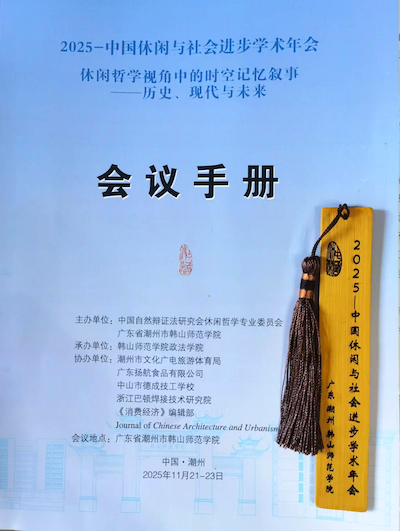
This conference was undertaken by the School of Politics and Law, Hanshan Normal University. Teachers Chen Ting and Cai Yulin participated in the compilation of the Conference Handbook; many teachers and student volunteers participated in the preparation and organization to ensure the smooth holding of the conference; Wan Fangliang, a master student from Chengdu Institute of Mountain Hazards and Environment, Chinese Academy of Sciences & Ministry of Water Resources, and University of Chinese Academy of Sciences, typeset and edited the nearly 400-page Conference Proceedings and produced a theme video "Paying Tribute to the 30th Anniversary of China's Leisure Research", making contributions to leaving precious academic memories of this annual conference; Sun Hongwu, Vice Chairman, and Liu Qiyan, Secretary-General of the Specialized Committee of Leisure Philosophy, Chinese Society for Dialectics of Nature, presided over the morning plenary sessions respectively; Ma Huidi coordinated, and arranged the conference.
This annual conference is an important academic summary of the 30th anniversary of China's leisure research and a new starting point for the development of the discipline. With temporal-spatial memory as the clue, the conference connects historical inheritance and future prospects, not only deepening the theoretical understanding of leisure philosophy, but also providing academic solutions for practical problems, fully demonstrating the original mission of leisure research of "exploring the path for academics and praying for people's well-being". It is expected that taking this annual conference as an opportunity, leisure research can continue to expand academic boundaries, strengthen practical empowerment, and inject stronger academic power into social progress and people's well-being.
The smooth holding of the conference was supported and assisted by the Chaozhou Bureau of Culture, Radio, Television, Tourism and Sports, People's Political Consultative Conference News, Tuanjie Bao, Guangdong Yanghang Food Co., Ltd., Zhongshan Decheng Technical School, Zhejiang Barton Welding Research Institute, Editorial Department of Consumer Economics, and Journal of Chinese Architecture and Urbanism.
(Acknowledgment: The English version courtesy of Professor Wang Fengnian.)
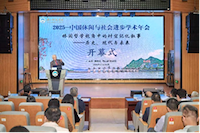 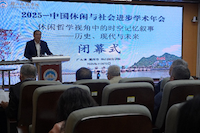
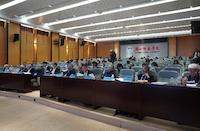 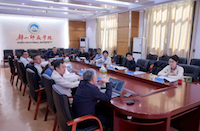 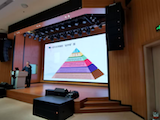
(Scenes of the Plenary Session and Group Discussions)
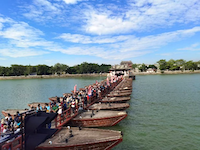 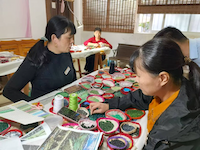
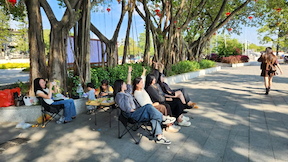 
(Scenes from Chaozhou's Streets and Workshop on Chaozhou Bead Embroidery)
|